
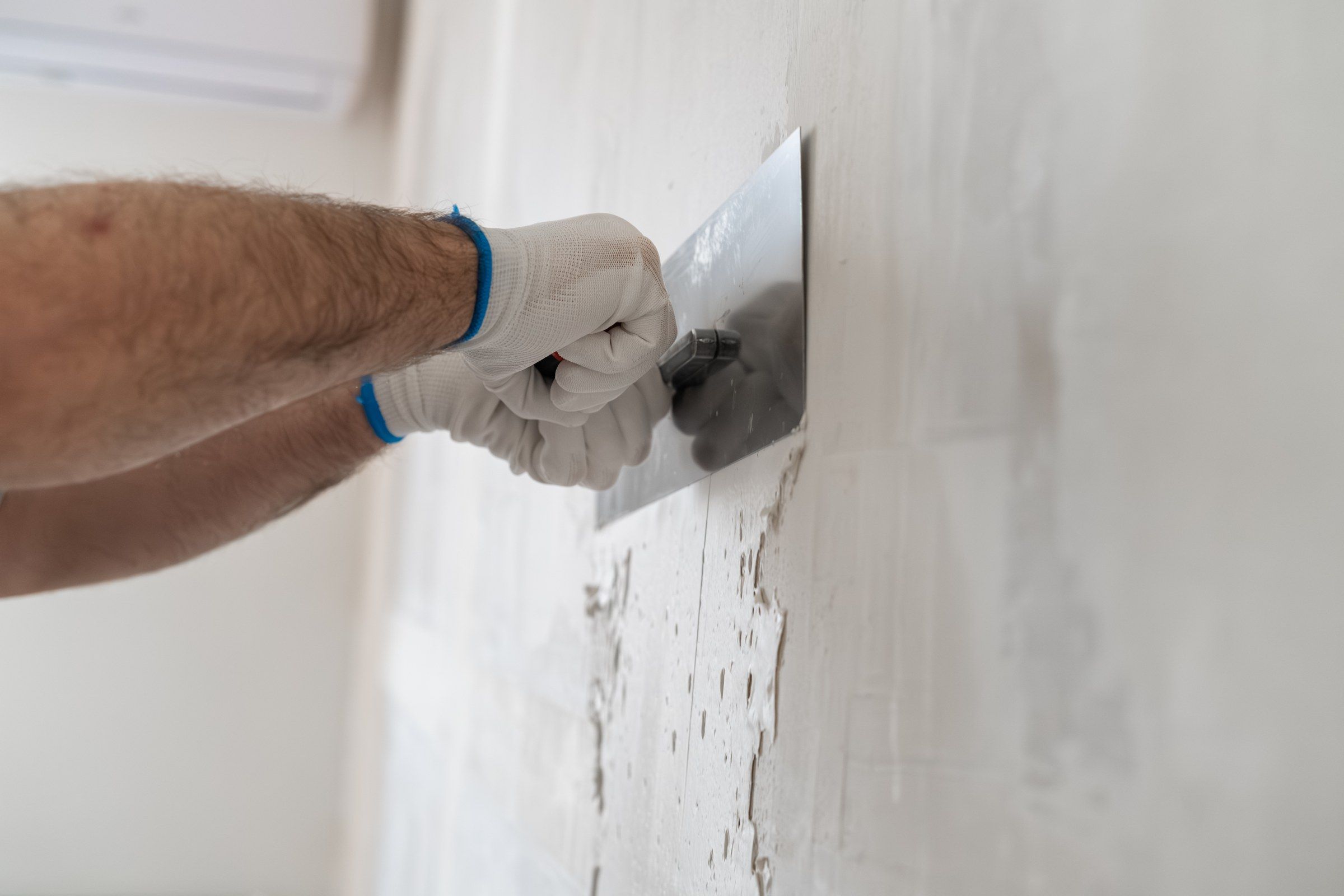
Drywall patching in Waukesha
One hole or twenty. Each one cut square, backed, taped and feathered until the wall looks whole.
Get a free estimate- Sizes
- From screw anchors to several square feet
- Visits
- Usually two, sometimes one
- Finish
- Sanded, texture matched, ready for primer
A hole in the wall is a small problem. A bad patch is a permanent one. It sits there as a raised square under the paint, and everybody who walks in sees it.
We patch drywall the long way, which is the only way that works. The damaged piece comes out. A new piece goes in on solid backing. The joints are taped and coated wide. When the paint goes on, the patch is gone.
The difference between a patch and a fix
Stick-on mesh squares and a tub of spackle will cover a hole. They will not hide it. The mesh adds thickness, the spackle shrinks, and without tape the edge cracks inside a year.
A proper repair replaces the missing drywall with drywall. The seams are treated like any other joint in the house: tape, three coats, each wider than the last. The final coat runs a foot or more past the patch, so there is no hump to catch the light.
What we patch
Door handle holes
The classic. Usually paired with a new door stop.
Plumber and electrician cuts
Access holes after a repipe, a rewire or a leak hunt.
TV mount and shelf damage
Pulled anchors and torn paper.
Old openings
Removed wall heaters, phone jacks, intercoms and vents.
Rental turnovers
Every ding in a unit handled in one trip.
How a patch is built
Cut it clean
Damage is cut back to a neat rectangle with firm edges.
Back it
Wood or metal backing is fixed behind the opening.
Fill it
New board of the same thickness is screwed in flush.
Tape and coat
Joints taped, then three coats, feathered wide.
Sand and texture
Sanded smooth and textured to match the wall.
What we use
Matching board thickness matters. Most walls are 1/2-inch. Some ceilings and garage walls are 5/8-inch. A thin patch in a thick wall will always sit low.
We use setting compound for the first coats because it hardens fast and barely shrinks, then a lightweight finishing compound that sands easily. Torn paper is sealed first so it does not bubble.
Results
Invisible after paint
No outline, no hump, no change in texture.
Strong
Backed and taped, it will not crack out.
Fast
Small jobs are in and out quickly.
Affordable in batches
Several patches in one visit cost far less each.
What sets the price
Size matters less than people think. These matter more.
Number of patches
Every patch needs the same coats and the same drying time. Ten patches in one trip cost far less per patch than one.
Texture
A smooth wall is the simple case. Orange peel, knockdown and skip trowel all need matching, and matching takes test passes.
Location
Mid-wall in a hallway is easy. Ceilings, stairwells, and spots beside tile or cabinets are slower.
Torn paper
Pulled anchors and removed mirrors often tear the face paper over a wide area. The whole torn area has to be sealed and skimmed.
What caused it
Impact damage is done once patched. A hole from a leak needs the leak fixed and the cavity dry first.
Why a patch takes more than one visit
The board goes in fast. The compound is what takes time. Each coat has to harden before the next, and each one is spread wider than the last. Setting compound lets us put on two coats in one visit for small work. The final coat and sanding usually wait for a second trip.
Width is what hides a patch. A six-inch hole ends up with compound feathered eighteen inches or more across. That looks excessive while it is wet. It is the reason there is no hump when it is painted.
Then comes texture, if the wall has one. Spray textures are matched by adjusting the mix and the distance until a test board looks like the wall. Hand textures are matched by eye and by wrist. Neither is exact science. A good match disappears at arm's length under paint.
Why patches show
No backing
A patch with nothing behind it moves when pushed. The edges crack.
No tape
Compound alone does not bridge a joint. It cracks along the cut line.
One thick coat
Heavy fills shrink and leave a dish in the wall.
No primer
Unprimed compound drinks paint and leaves a flat rectangle.
Send a photo before the visit. Put a hand or a coin in the frame for scale, and take a second shot from across the room so we can see the wall and the texture. Most patch jobs can be priced from pictures.
Afterward, prime the repair, then repaint the wall corner to corner. Spot painting over a patch works on fresh paint in the same batch. On paint more than a year or two old it almost never blends.
Which patch method fits which hole
Nail and screw holes
Filled with compound in two passes and sanded. No tape needed. The second pass covers the shrinkage of the first.
Up to about two inches
Small enough to bridge with a reinforced patch and setting compound, as long as the board around it is firm.
Fist to dinner plate
Cut square, backed with wood strips screwed inside the wall, filled with new board, taped on all four sides.
Larger than a stud bay
Cut back to the middle of the studs on each side so the new piece fastens to framing. Finished like a new joint.
Around boxes and pipes
Oversized cut-outs are closed with fitted pieces and taped tight to the box or escutcheon so the cover plate hides the edge.
The method decides how long the patch lasts. A plate-sized hole bridged with mesh and no backing will look fine for a few months. Then someone leans on it.
We also fix what caused the hole where that is simple. A door stop behind a handle hole. A proper anchor or blocking where a shelf pulled out. Otherwise the same spot gets hit again and the new patch takes the damage.
If the patch sits on a wall that has been repaired before, expect us to widen the work. Old humps and ridges next to a new flat patch look worse than before, so we blend the lot.
Good to know
Landlords and sellers: a pre-listing or turnover patch run is one of the cheapest ways to make a property show better. We go room to room, fix everything marked, and leave it ready for the painter the same week.
Keep a note of the wall color and sheen somewhere you will find it. The next time a wall needs a patch, having the exact paint makes the repair far easier to hide.
Before and after
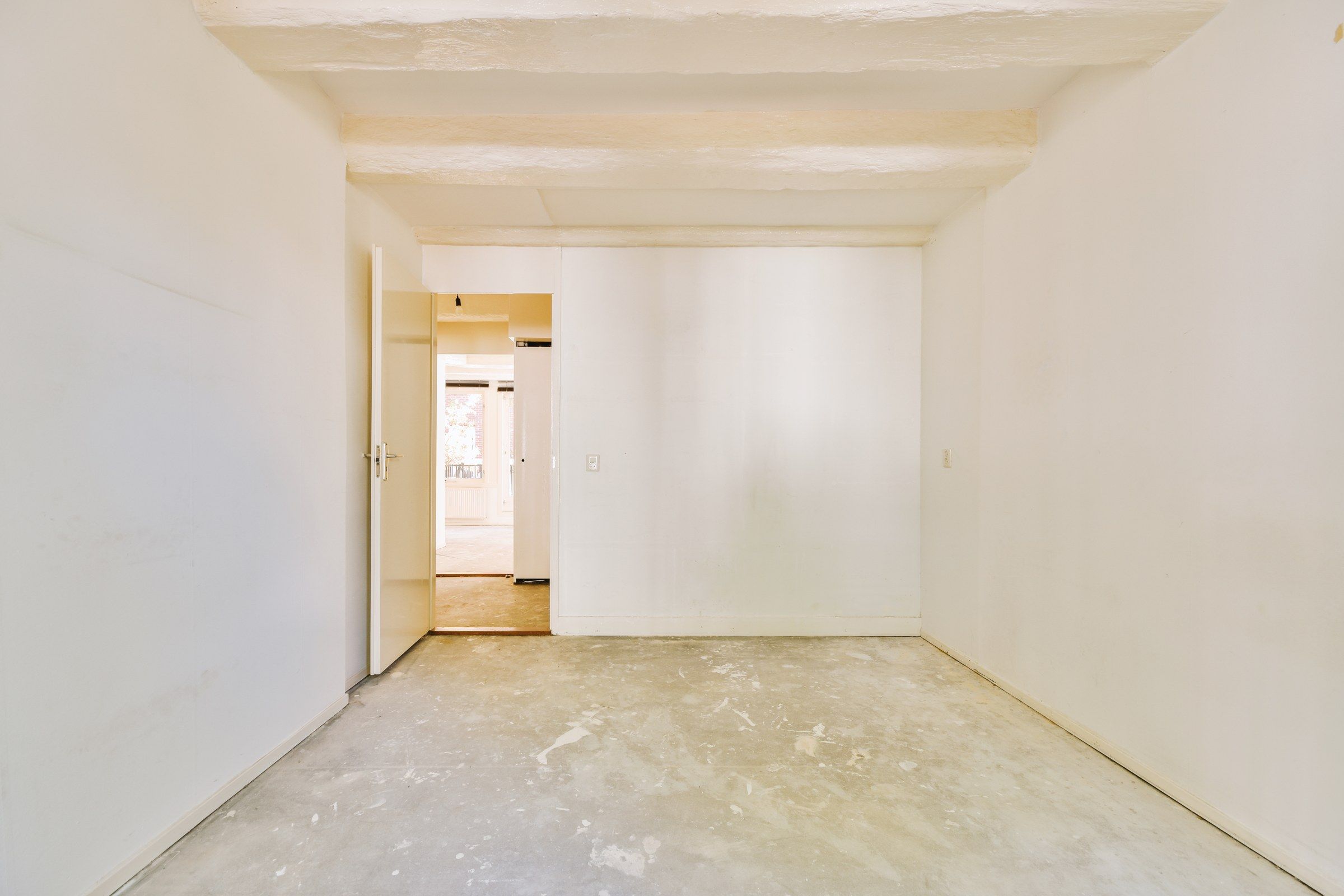
Stock photos used to illustrate the change. Not a specific project of ours.
Patching around Waukesha
With Carroll University in town and a large stock of rentals around it, Waukesha has plenty of move-out repairs every summer. Landlords and managers call us with a list, and we work through a unit in a day or two.
Homeowners more often call after trade work. Older houses here are still being rewired and repiped, and each of those jobs leaves a trail of access holes behind.
Questions about drywall patching
Can you match my wall texture?
In most cases. We test on a scrap first. Common textures like orange peel and knockdown match well.
Do I have to repaint the whole wall?
For the best result, yes. Touch-up paint on a patch usually shows as a different sheen.
How big a hole can be patched?
Any size. Past a certain point it is quicker to replace the whole sheet, and we will tell you when that is the better route.
Is a small job worth your time?
Yes. Small repairs are regular work for us.
Can a patch be done in one day?
Small ones often can, using fast-setting compound. Larger patches need a second visit for the final coat and sanding.
Work that often goes with this
Drywall Repair
Cracks, pops, dents, loose tape and broken corners put right.
DetailsCeiling Drywall Repair
Cracks, sags, pops and stains fixed overhead.
DetailsWater-Damaged Drywall Repair
Wet, stained or moldy board removed and replaced.
DetailsDrywall Finishing
Level 4 and Level 5 finishes, skim coats and texture.
DetailsGet a price for drywall patching in Waukesha
Describe the job, add a photo, and we will send a written estimate.